The House That Couldn't Sell: Why Location Will Always Outrank Granite Countertops
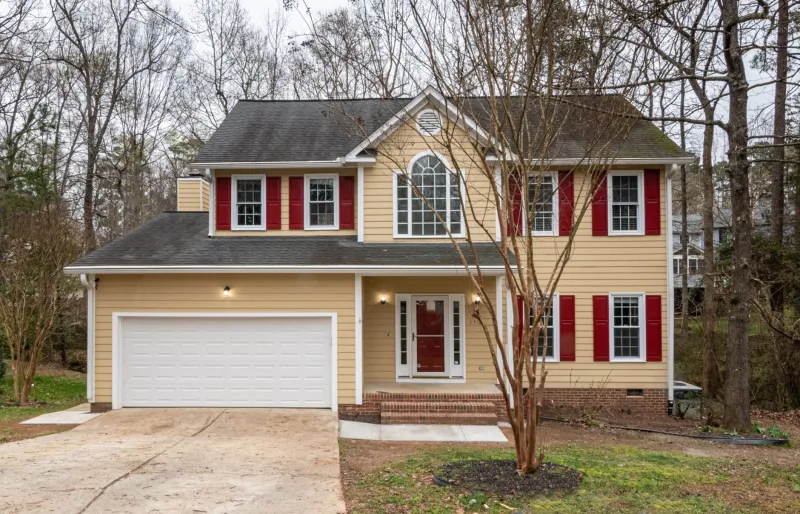
Let me describe a home you may recognize.
It has an open-concept main floor, freshly refinished hardwood floors, and a kitchen that was recently updated with quartz countertops, stainless appliances, and custom cabinetry. The primary suite has a spa-style bathroom with a soaking tub and a walk-in shower with frameless glass. The backyard is professionally landscaped with a paver patio and ambient lighting. The listing photographs are stunning.
It has also been sitting on the market for 140 days. The sellers have reduced the price twice. Their agent is beginning to suggest a third reduction.
This scenario is not hypothetical. It plays out in residential markets across the country with uncomfortable regularity, and it is almost never caused by the home itself. The home, in most of these cases, is genuinely lovely. The problem is where it is — or more precisely, what surrounds it.
At 119 Woods Drive, we are committed to giving buyers and sellers an honest picture of what drives long-term real estate value. And the most honest thing we can say is this: neighborhood fit is not one factor among many. It is the factor. Everything else is secondary.
The Illusion of the Upgrade
The American real estate market has developed a near-obsessive relationship with interior finishes. HGTV programming, Instagram home accounts, and the renovation industrial complex have collectively convinced millions of buyers that the quality of a home's kitchen and bathrooms is the primary determinant of its value. Sellers spend tens of thousands of dollars on pre-listing renovations based on this assumption. Some of them are right. Many of them are not.
The uncomfortable reality is that upgrades are location-dependent. A $60,000 kitchen renovation in a neighborhood where the median sale price is $280,000 does not return $60,000 in additional value. It may return $15,000 — or nothing at all — because the surrounding market cannot support the price point those finishes would require. Appraisers call this over-improvement, and it is one of the most common ways homeowners inadvertently destroy equity rather than build it.
Conversely, a modest home with dated finishes in a neighborhood with strong schools, rising demand, and a walkable commercial corridor will frequently outperform its renovated counterpart in a stagnant or declining area. The bones of the neighborhood — its social infrastructure, its schools, its accessibility, its trajectory — are doing more work than any countertop ever could.
What Buyers Are Actually Evaluating
When a prospective buyer walks through a home, they are conducting two simultaneous evaluations. The first is conscious: they are assessing square footage, layout, condition, and finishes. The second is largely unconscious: they are absorbing the neighborhood — the condition of adjacent properties, the noise environment, the walkability, the perceived safety, the character of the street. Research consistently shows that the second evaluation is more predictive of purchase decisions than the first.
Consider what buyers consistently cite as their primary concerns in survey after survey: school district quality, neighborhood safety, proximity to employment centers, and access to retail and recreation. These are all neighborhood-level variables. They exist entirely outside the four walls of the property being evaluated.
This is why a three-bedroom colonial with original 1980s bathrooms in an excellent school district will frequently sell faster and for more money than a fully renovated four-bedroom in a district with declining enrollment and a longer commute to major employment hubs. The market is not irrational. It is pricing what buyers actually value.
Real Consequences of Neighborhood Mismatch
The effects of purchasing the right house in the wrong neighborhood are not merely abstract. They manifest in concrete, financially painful ways.
Extended days on market. Homes that are well-appointed but poorly located routinely sit on the market two to four times longer than neighborhood-appropriate properties. Extended market time generates its own stigma — buyers begin to wonder what is wrong with the home, even when the answer is simply that the location limits the buyer pool.
Appraisal gaps. In neighborhoods with limited comparable sales at higher price points, a renovated home may appraise below its asking price, forcing the seller to reduce the price or the buyer to cover the gap in cash. This is a direct consequence of the surrounding market's inability to validate the property's improvements.
Equity erosion over time. A neighborhood in demographic or economic decline exerts consistent downward pressure on property values regardless of individual home condition. Homeowners who invest in improvements expecting appreciation may find that their equity is being eroded by forces entirely outside their control — forces that were visible, had they looked, before they purchased.
The Variables That Neighborhoods Control
It is worth being specific about what a neighborhood actually determines, because the list is longer than most buyers appreciate.
School district assignment — often the single most powerful driver of residential demand in family-oriented markets. A home's school district is immutable short of a redistricting decision, and it is priced into the market accordingly.
Walkability and access — measured by tools like Walk Score, walkability is increasingly valued by buyers across age cohorts, not just urban millennials. Access to parks, retail, dining, and transit within walking distance consistently correlates with price premiums.
Community character and cohesion — harder to quantify but real. Neighborhoods with active civic associations, maintained common areas, and visible community investment signal to buyers that the area is cared for. That signal has monetary value.
Trajectory — perhaps most importantly, a neighborhood's direction of travel matters as much as its current state. A modestly priced neighborhood showing clear signs of investment and renewal may be a superior long-term bet to a more polished community that has plateaued or begun to decline.
A Note to Buyers Who Are Tempted by the Beautiful House
This is not an argument against buying a home you love. Emotional connection to a property is legitimate and meaningful. But it is an argument for expanding your due diligence beyond the property line.
Before you allow yourself to fall in love with the kitchen, drive the neighborhood at different times of day. Walk to the nearest school, park, and grocery store. Research the school district ratings and enrollment trends. Pull up the municipality's zoning map. Talk to people who live nearby. Read the local news.
If the neighborhood passes that scrutiny, the beautiful kitchen is a genuine bonus. If it does not, no amount of quartz countertop will compensate for what you will face when it is time to sell.
The house at 119 Woods Drive — the one that feels like home — is only truly that if the street it sits on supports the life you intend to live there, and the value you intend to build. Choose the neighborhood first. The house will follow.