Before You Buy, Look Up: What Climate Resilience Reveals About a Neighborhood's Future Value
For most of the past century, the standard homebuyer checklist looked roughly the same: square footage, school district, proximity to work, price per square foot. Climate barely registered as a line item. That calculus is changing — and changing quickly.
Across the United States, buyers are increasingly asking questions that would have seemed unusual a decade ago. How often does this street flood? What is the average cooling cost in August? Has this block ever lost power for more than three days? These are not the concerns of alarmists. They are the practical inquiries of buyers who understand that a home is a 30-year financial commitment, and that the environment surrounding it is no longer predictable in the ways it once was.
At 119 Woods Drive, we believe that a truly informed purchase requires looking beyond the listing sheet — and increasingly, that means looking at the sky, the soil, and the drainage infrastructure beneath the pavement.
Flood Risk Is Not Just a Coastal Conversation
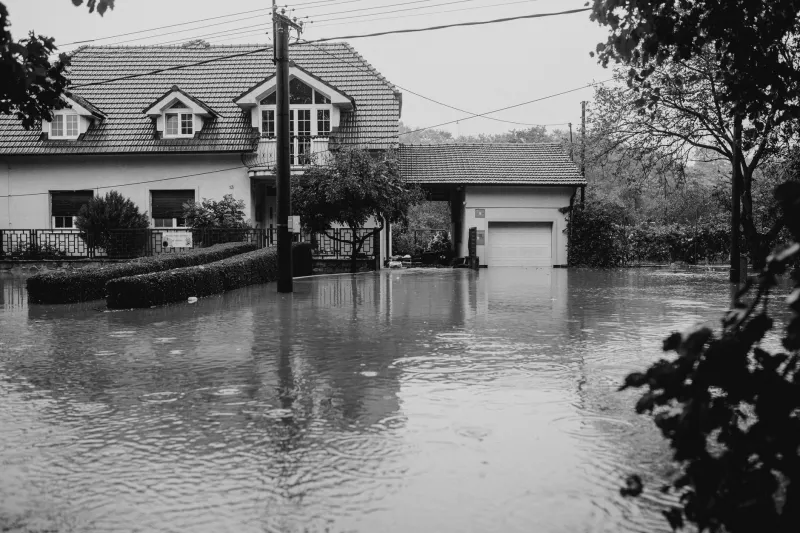
One of the most persistent misconceptions in residential real estate is that flood risk belongs exclusively to beachfront or riverfront properties. In reality, flooding has become a significant concern for inland neighborhoods across the country, from suburban developments in the Midwest to hillside communities in the Southeast.
FEMA flood maps remain the standard starting point for any buyer's due diligence, but they have known limitations. Many maps have not been updated to reflect recent weather events or changes in local drainage infrastructure. A neighborhood that sat comfortably in a low-risk zone five years ago may have experienced two significant flood events since that designation was last reviewed.
Buyers should supplement FEMA data with local municipal records, inquiries to neighboring homeowners, and platforms such as First Street Foundation's Flood Factor tool, which uses more current modeling to project risk over a 30-year mortgage horizon. The question is not merely whether a property flooded last year — it is whether it is likely to flood during the life of your loan.
Flood risk also carries direct financial consequences that extend well beyond the purchase price. Flood insurance premiums have risen substantially in recent years, particularly following FEMA's Risk Rating 2.0 overhaul. In some markets, insurance costs have effectively added hundreds of dollars per month to the true cost of ownership — a figure that rarely appears in any mortgage pre-approval estimate.
The Heat Island Effect and What It Costs You Every Summer
Urban and suburban heat islands — areas where dense pavement, limited tree canopy, and concentrated building mass trap heat — represent a quieter but equally significant climate variable. A neighborhood with minimal green space and abundant dark roofing and asphalt can run several degrees warmer than a comparable neighborhood just a mile away with mature tree coverage and permeable surfaces.
That temperature differential translates directly into energy costs. A home in a heat island may require substantially more cooling capacity during summer months, elevating utility bills and accelerating wear on HVAC systems. Over a decade of ownership, those cumulative costs are meaningful.
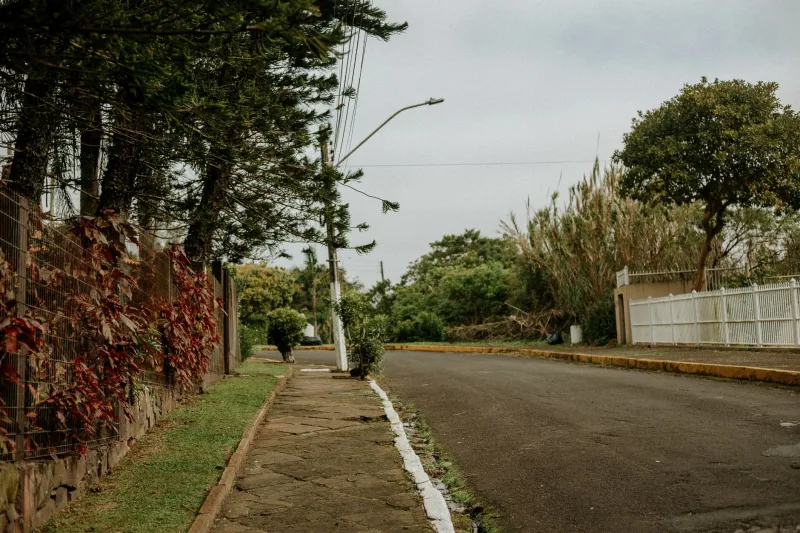
When evaluating a street, note the tree canopy coverage, the ratio of green space to paved surface, and the orientation of the homes relative to afternoon sun exposure. Neighborhoods that have invested in shade infrastructure — whether through intentional planting programs or simply the natural maturation of older trees — tend to offer measurably more comfortable and cost-efficient living conditions during peak summer months.
Storm Resilience: Infrastructure You Cannot See From the Curb
A neighborhood's ability to recover from severe weather events depends largely on infrastructure that is invisible during a standard showing: underground drainage capacity, the age and condition of stormwater systems, the presence of retention ponds or bioswales, and the overall grading of the land.
Before committing to a street, it is worth requesting information from the local municipality about recent drainage improvements and any known stormwater deficiencies in the area. Many cities publish capital improvement plans that outline where infrastructure investment is — and is not — being directed. A neighborhood that has received recent stormwater upgrades is demonstrably better positioned than one waiting for improvements that may be years away.
Power grid resilience is a related consideration that has gained significant attention following major storm events in Texas, Florida, and the Mid-Atlantic states. Buyers in markets prone to severe weather are increasingly asking whether neighborhoods have underground utility lines, how quickly power is typically restored after outages, and whether the surrounding community has invested in distributed energy resources such as neighborhood microgrids.
Insurance Availability: The New Canary in the Coal Mine
Perhaps the most telling signal of a neighborhood's climate vulnerability is the state of its insurance market. In parts of California, Florida, and Louisiana, major insurers have withdrawn from the market entirely or declined to renew existing policies — not because of individual property conditions, but because of the aggregated risk profile of entire regions.
When a street becomes difficult to insure at a reasonable premium, its pool of eligible buyers shrinks considerably. Buyers dependent on conventional financing must secure homeowners insurance as a condition of closing; if that insurance is unavailable or prohibitively expensive, the transaction cannot proceed. Over time, this dynamic suppresses demand and, consequently, property values.
Before making an offer, obtain insurance quotes from multiple carriers. If the quotes are significantly higher than comparable properties in other parts of the market, or if carriers are reluctant to write a policy at all, treat that as substantive market intelligence — not merely a paperwork inconvenience.
How Neighborhoods Are Adapting
The most encouraging development in this conversation is that many residential communities are not simply absorbing climate risk passively. Neighborhoods across the country are pursuing meaningful adaptations: converting turf to drought-tolerant landscaping, installing permeable pavement in parking areas, expanding tree canopy through coordinated planting programs, and advocating for updated stormwater infrastructure through local government channels.
A street that is actively investing in its own resilience — through HOA initiatives, neighborhood association advocacy, or municipally funded improvements — demonstrates a kind of collective foresight that correlates with long-term property stability. It is worth asking, during your evaluation of any neighborhood, what organized efforts are underway to address environmental vulnerabilities. The answer can tell you a great deal about both the physical durability of the street and the engagement of the people who live on it.
The Informed Buyer's Climate Checklist
Before committing to any property, consider working through the following questions:
- What is the property's FEMA flood zone designation, and when was it last updated?
- Has the street experienced flooding in the past ten years, and if so, how frequently?
- What are the projected flood and fire risk scores over a 30-year horizon using current modeling tools?
- How does the neighborhood's tree canopy and surface permeability compare to surrounding areas?
- What is the current homeowners insurance availability and cost, and are premiums trending upward?
- Has the municipality made recent investments in stormwater or utility infrastructure in this area?
- Is the neighborhood organized around any resilience or adaptation initiatives?
None of these questions alone should determine whether you purchase a home. But collectively, they form a picture of the environmental context in which your investment will either hold its value or quietly erode it.
A home on the right street should shelter you from more than the weather. It should be positioned to endure it.