Before You Make an Offer, Drive the Street at Rush Hour
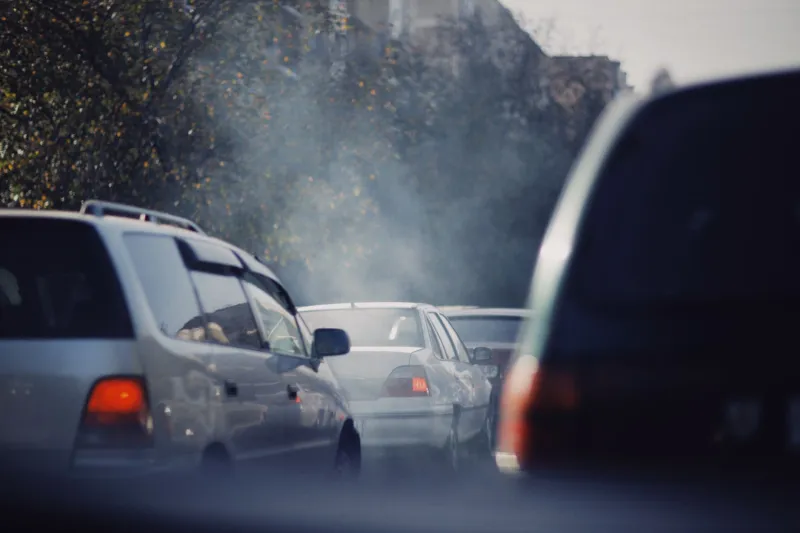
There is a version of every neighborhood that most homebuyers never see. It exists between 7:30 and 9:00 in the morning, and again between 4:30 and 6:30 in the evening — and it looks nothing like the quiet, sun-dappled street you walked through on a Saturday afternoon during your showing.
Traffic is one of the most underestimated variables in residential real estate. Buyers spend considerable energy evaluating square footage, school ratings, and kitchen finishes, yet relatively few think to assess how a neighborhood actually functions during the hours when most American households are moving — to work, to school, to errands. That oversight can be costly. The character of a street at peak commuting hours is, in many ways, a more accurate portrait of daily life than anything a listing description will ever convey.
The Cut-Through Problem
Not all traffic is created equal. There is a meaningful difference between residents using their own neighborhood streets and outside commuters treating a quiet residential block as a shortcut between two busier arterials.
Cut-through traffic — the term planners use for non-resident vehicles routing through residential areas to avoid congestion on main roads — is a persistent and growing issue in suburban communities across the United States. Navigation apps like Waze and Google Maps have dramatically accelerated this phenomenon. Algorithms optimize for speed, and when a major corridor backs up, thousands of drivers are simultaneously redirected through the same side streets. What was once a peaceful cul-de-sac feeder road can, within a single app update cycle, become a de facto commuter artery.
For homeowners on affected streets, the consequences are tangible. Noise levels increase. Pedestrian safety diminishes. The informal social fabric of a block — neighbors walking dogs, children riding bikes, residents pausing to speak with one another — erodes under the pressure of through-traffic. Over time, streets with unmanaged cut-through volumes tend to see reduced curb appeal investment from homeowners, a subtle but measurable signal that long-term confidence in the block is softening.
What the Data Can Tell You
Savvy buyers are increasingly turning to publicly available data to evaluate traffic conditions before committing to a purchase. Several resources are worth consulting during due diligence.
State and municipal traffic count databases often publish annual average daily traffic (AADT) figures for roads throughout a jurisdiction. These numbers reveal how many vehicles travel a given segment per day and can be compared against established thresholds for residential street classifications. A local residential street carrying traffic volumes more typical of a collector road is a meaningful red flag.
Accident and incident data is another underutilized resource. Many cities and counties publish geocoded crash reports, and platforms such as the Vision Zero Network maintain publicly accessible tools that map pedestrian and cyclist incidents. A concentration of accidents near a particular intersection — especially involving pedestrians — speaks directly to the livability and safety profile of a neighborhood.
School zone and pedestrian crossing patterns deserve particular attention for buyers with children or those purchasing in family-oriented communities. Streets adjacent to elementary and middle schools experience highly predictable but intense traffic spikes twice daily. The quality of crosswalk infrastructure, the presence of crossing guards, and the physical design of school drop-off zones all factor into how safely and comfortably that traffic is absorbed.
The 8 AM and 5 PM Test
No database substitutes for direct observation. Before making an offer on any property, prospective buyers should commit to visiting the street — on foot or by car — during both the morning and evening peak commuting windows on a weekday.
What you are looking for is not merely volume, but behavior. Do drivers slow appropriately at stop signs, or do they treat them as suggestions? Is there evidence of speeding — worn pavement markings, tire tracks across landscaping, gravel displaced onto sidewalks? Are pedestrians forced to navigate around parked delivery vehicles or double-parked cars? Does the noise level make outdoor conversation difficult?
These are not trivial aesthetic concerns. They are indicators of how a neighborhood functions under real-world conditions, and they have direct implications for quality of life, property maintenance, and resale trajectory.
It is also worth noting how the street feels from the interior of the home itself. Sit inside with the windows closed and assess ambient noise. Then open the windows. Many buyers are surprised to discover that a home that felt tranquil during a weekend showing becomes noticeably less so on a Tuesday morning when the neighboring street is carrying commuter traffic.
Traffic Infrastructure as a Neighborhood Forecast
Beyond the present condition of a street, traffic infrastructure can function as a forward-looking indicator of neighborhood trajectory. Communities that are investing in traffic calming measures — speed tables, raised crosswalks, bulb-outs, planted medians, and reduced speed limits — are signaling a commitment to pedestrian-scale livability. These investments tend to correlate with broader neighborhood improvement momentum and rising property values.
Conversely, neighborhoods where traffic complaints are chronic and unaddressed, where sidewalks are absent or in disrepair, and where pedestrian crossing infrastructure is minimal, may be experiencing a form of municipal disinvestment that extends well beyond transportation. The condition of a street's infrastructure is rarely isolated; it tends to reflect the overall level of civic attention a neighborhood receives.
For buyers evaluating two otherwise comparable properties in adjacent neighborhoods, the relative quality of traffic management and pedestrian infrastructure can serve as a useful tiebreaker — one grounded in long-term value preservation rather than short-term aesthetics.
Parking Patterns and the Story They Tell
Related to traffic, but distinct in its implications, is the matter of on-street parking. A street where parking is consistently at capacity — particularly in front of homes that do not have driveways — can indicate density pressures the neighborhood was not designed to accommodate. In communities near commercial corridors, transit stops, or event venues, residential streets sometimes absorb parking demand from adjacent uses, creating friction between residents and non-resident visitors.
During your peak-hour visits, observe not just moving vehicles but parked ones. Note whether parking is orderly and contained within designated areas, or whether vehicles are crowding driveways, blocking sight lines at intersections, or spilling onto lawns. These patterns, while seemingly minor, accumulate into meaningful quality-of-life considerations over the course of ownership.
Making Traffic Part of Your Due Diligence
Real estate due diligence has traditionally focused on the physical condition of a home — the roof, the foundation, the mechanical systems. These remain essential. But the external environment in which a home sits is equally worthy of structured investigation.
At 119 Woods Drive, we consistently encourage buyers to think of a home not as an isolated asset but as a node within a living, dynamic neighborhood system. Traffic patterns are one of the clearest expressions of how that system actually operates. They shape noise levels, pedestrian safety, curb appeal investment, and ultimately, how desirable a street remains to future buyers.
The most informed offer you can make is one built on knowing exactly what you are buying into — at every hour of the day.