Rooted in Value: What Mature Street Trees Really Mean for Your Home's Price Tag
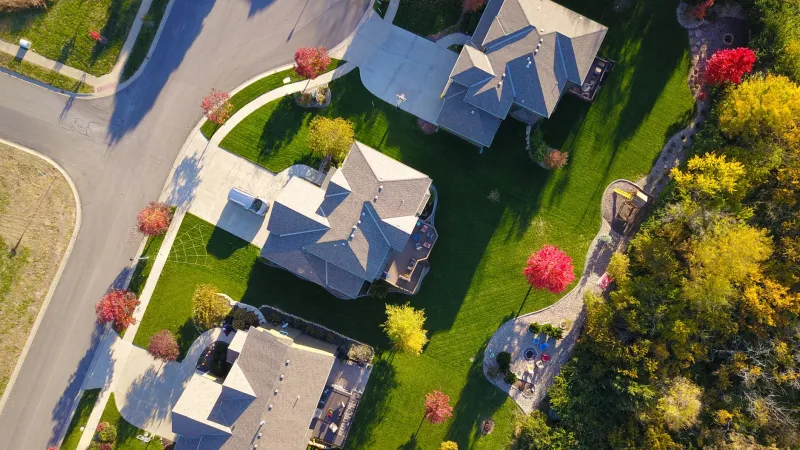
There is a particular quality to a street lined with mature oaks or maples—the way their canopies arch overhead, the dappled light they cast across front lawns in the afternoon, the seasonal rhythm they impose on a neighborhood. Most people register this beauty instinctively. Far fewer recognize that those same trees are functioning as a financial asset, one that influences appraisal figures, days on market, and final sale prices in ways that are both consistent and well-documented.
For buyers evaluating properties and sellers preparing to list, canopy coverage deserves a serious place in the conversation—not as a lifestyle amenity, but as a component of market value.
What the Research Actually Shows
The relationship between trees and property values has been studied extensively by urban forestry researchers, economists, and real estate analysts. The findings are remarkably consistent across geographic regions and housing types.
The USDA Forest Service, which has conducted some of the most rigorous analysis on this subject, has found that residential properties with significant tree coverage sell for between 3 and 15 percent more than comparable homes without it. On a $350,000 home, that range represents $10,500 to $52,500 in additional value—a figure that commands attention.
More specifically, street trees—those planted along public rights-of-way rather than within a private yard—have been shown to contribute premiums averaging $7,000 to $15,000 per property in many mid-sized American cities. A widely cited study from Portland, Oregon, found that street trees added roughly $8,870 to adjacent sale prices and reduced time on market by nearly two days. Similar findings have emerged from studies conducted in Charlotte, Atlanta, and across the Northeast.
The mechanism behind these numbers is not purely aesthetic. Trees perform measurable environmental functions that translate directly into household savings: they reduce summer cooling costs by shading rooftops and paved surfaces, they manage stormwater runoff in ways that protect foundations and basements, and they buffer street noise in densely settled neighborhoods. Appraisers and buyers, whether they articulate it or not, are responding to all of these factors simultaneously.
How Canopy Coverage Shapes a Neighborhood's Character
Beyond individual property values, mature trees play a defining role in establishing neighborhood identity. Streets with established canopy coverage tend to signal long-term stability—they suggest that the homes around them have been cared for across multiple decades, that the community has roots in both the literal and figurative sense.
This perception carries weight in the market. Buyers relocating from other cities frequently describe tree-lined streets as one of their primary criteria, often without being fully conscious of why. What they are responding to, in part, is the visual compression that canopy creates—the sense of enclosure and human scale that wide, open streets without trees cannot replicate.
Neighborhoods with dense canopy coverage also tend to exhibit stronger social cohesion, according to urban planning research. Shaded sidewalks encourage pedestrian activity; pedestrian activity generates informal interaction among neighbors; that interaction builds the kind of community fabric that further supports long-term property values. It is a reinforcing cycle that begins, quite literally, at the roots.
Assessing Canopy Coverage Before You Buy
For prospective buyers, evaluating a property's tree context requires looking beyond the immediate lot. A single large tree in the backyard is meaningful, but the more significant question concerns the street itself and the surrounding block.
Several practical steps can help buyers assess canopy quality during the due diligence process:
Visit during the growing season. Trees that appear sparse or unremarkable in winter reveal their full canopy value between May and September. If your property search extends into the fall or winter months, consider requesting photographs taken during summer or using satellite imagery from Google Maps to evaluate leaf coverage.
Note the age and species of street trees. Younger trees planted within the last decade offer future value but minimal present-day impact. Mature oaks, elms, maples, and sycamores—trees with substantial trunk diameter and broad canopies—represent the real premium. Ask the seller or the local municipality about the age and maintenance history of street trees adjacent to the property.
Check with the municipality about replacement plans. Street trees are typically owned and maintained by the city or town, not the homeowner. Many municipalities have urban forestry programs that document tree inventories and schedule removals or replacements. A quick inquiry with the local public works or parks department can reveal whether any trees near the property are slated for removal due to disease, age, or infrastructure conflicts.
Look for tree-related infrastructure concerns. Mature trees are valuable, but they can also create complications. Roots that have grown into sewer lines, branches that overhang aging roofs, and species known for aggressive root systems—such as silver maples and certain willows—can generate maintenance costs that offset some of the value premium. A pre-purchase inspection that includes a review of the sewer lateral is advisable on any heavily treed property.
What Happens When Developers Remove Them
The inverse of the canopy premium is perhaps even more instructive. When established trees are removed—whether to accommodate new construction, road widening, or utility projects—the financial impact on surrounding properties is measurable and often immediate.
Studies examining neighborhoods before and after significant tree loss have documented value declines ranging from 2 to 9 percent on adjacent properties. In some cases, the effect persists for years, reflecting the time required for replacement plantings to mature. A newly planted street tree takes 15 to 25 years to reach the canopy size associated with maximum value contribution. That is not a gap that can be closed quickly.
This dynamic is particularly relevant in neighborhoods experiencing infill development or significant renovation activity. Buyers considering properties in areas where construction is ongoing should evaluate not only the current tree coverage but also the development pressures that might threaten it. A street that is densely canopied today may look very different in five years if several large lots are subdivided and developed.
Local tree preservation ordinances vary considerably across American municipalities. Some jurisdictions require permits for the removal of trees above a certain trunk diameter and mandate replacement planting when trees are taken down. Others offer little protection. Understanding the regulatory environment in a target neighborhood is a worthwhile step for buyers who are factoring canopy into their purchasing decision.
A Line Item Worth Adding to Your Evaluation
Real estate decisions involve a long list of variables—square footage, school districts, commute times, comparable sales. Trees rarely appear as a formal line item in any of these calculations, yet the evidence is clear that they belong in the conversation.
For sellers, investing in professional tree care—pruning, disease treatment, structural cabling—prior to listing can yield returns that rival more commonly discussed pre-sale improvements. For buyers, the presence of mature, well-maintained street trees on a target block is a legitimate market signal, one that speaks to both present value and long-term neighborhood stability.
At 119 Woods Drive, we believe that understanding your home means understanding everything around it—including what is growing at the curb. The trees on a street are not background scenery. They are, in a very real sense, part of the investment.