Who Lives Next Door Matters More Than You Think: The Hidden Value of a Cohesive Street
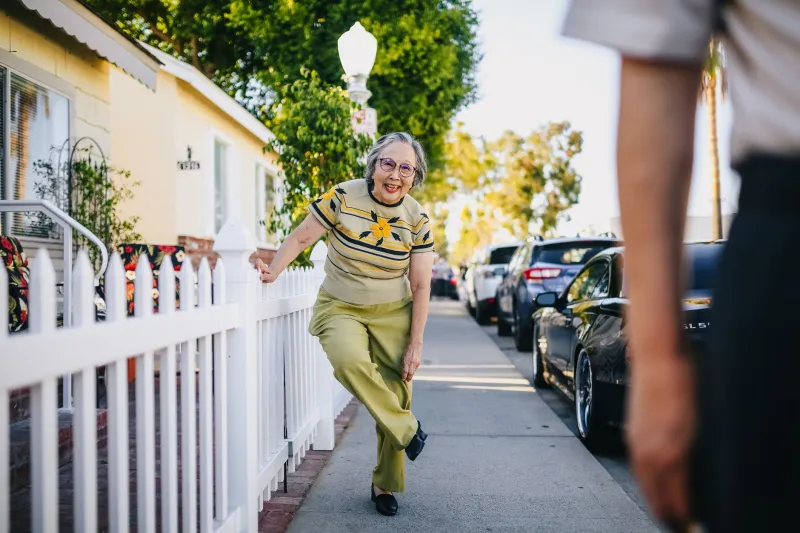
When buyers tour a home, they scrutinize crown molding, test light switches, and measure closet depths. Rarely do they pause to consider the woman across the street who has lived in her house for thirty-two years, or the block association that organizes an annual clean-up day each April. Yet those details — invisible on any listing sheet — may ultimately determine whether a property appreciates steadily or stagnates.
The social fabric of a residential street is not a soft, feel-good concept. It is a legitimate market variable, and homeowners who ignore it do so at a financial cost.
Why Social Cohesion Translates to Dollars
Property value is, at its core, a reflection of perceived desirability. Buyers are not simply purchasing walls and a roof — they are purchasing an experience of daily life. That experience is shaped, in no small part, by the people who share the block.
Neighborhoods with strong social ties tend to exhibit lower crime rates, better-maintained common areas, and faster intervention when problems arise — whether that means a neglected lawn, a suspicious vehicle, or a home falling into visible disrepair. According to studies conducted by the Urban Institute and various municipal housing authorities, blocks with active resident engagement report higher satisfaction scores and, correspondingly, stronger price retention over time.
The mechanism is straightforward: when neighbors know and trust one another, they collectively protect the asset. A street where residents wave from the porch, watch each other's homes during vacations, and informally flag concerns to one another functions as a distributed property management system — one that no individual homeowner could replicate alone.
The Stability Signals Buyers Sense Without Naming
Experienced buyers often describe a feeling they get when walking a block — a sense that a street is "solid" or "settled." That intuition is rarely arbitrary. It is a reading of social cues that signal long-term stability.
Long-term residents are perhaps the clearest indicator. When a significant portion of homeowners on a given street have held their properties for a decade or more, it communicates that the neighborhood delivers on its promise. People do not stay where they are unhappy. Conversely, high turnover — houses cycling through ownership every two or three years — can suggest unresolved issues that the listing price does not reflect.
Visible community investment is another signal. Seasonal decorations, maintained landscaping, block-level yard sales, and neighborhood watch signage all communicate active stewardship. These are not merely aesthetic choices; they are evidence of residents who regard their street as a shared enterprise.
Finally, the presence of mixed-tenure longevity matters. Streets that include both longtime owners and newer arrivals who quickly integrate into the community tend to be more resilient than those defined entirely by rapid demographic turnover or insularity.
What Longtime Residents Say About Street Character
Speak with any homeowner who has lived on the same block for twenty or more years, and a consistent theme emerges: the relationships formed early set the tone for everything that follows.
One longtime resident of a mid-sized Midwestern suburb described it this way: "When we moved in, our neighbor brought over a casserole. That sounds small, but it started a relationship. Twenty years later, that same neighbor called me when she noticed water pooling near my foundation while I was traveling. That call probably saved me tens of thousands of dollars."
This kind of informal watchfulness has tangible financial consequences. Deferred maintenance caught early is exponentially less costly than problems discovered at the point of sale. Neighbors who communicate openly create a feedback loop that benefits every property on the street.
Other residents point to the role of informal norms — unwritten understandings about noise levels, parking courtesy, and property upkeep. These norms do not appear in any HOA document, yet they shape daily life as powerfully as any formal regulation. Streets where those norms are widely understood and respected tend to maintain a consistency of appearance and atmosphere that supports property values across the board.
The Blocks That Decline — and Why
Not every street sustains its social fabric over time. Several factors can erode community cohesion, sometimes rapidly.
High investor concentration is one of the more significant disruptors. When a meaningful percentage of homes on a street are owned by absentee landlords and occupied by short-term tenants, the incentive structure changes. Renters are not universally indifferent neighbors — many are deeply invested in their immediate community — but the absence of a long-term ownership stake can reduce the likelihood of the sustained engagement that stabilizes a block.
Economic stress is another factor. When residents are stretched financially, deferred maintenance becomes more common, and the bandwidth for community participation narrows. This is not a moral failing; it is a structural reality. Streets that lack access to resources — community organizations, municipal services, neighborhood associations — are more vulnerable to gradual decline.
Finally, simple disconnection plays a role. In an era of private backyard living, streaming entertainment, and remote work, it is increasingly easy for neighbors to coexist without ever truly meeting. That disconnection, while understandable, has a cost.
What You Can Do to Strengthen Your Street
The encouraging reality is that individual homeowners have more influence over neighborhood social dynamics than they typically assume. The following approaches are practical, low-cost, and demonstrably effective.
Introduce yourself — and mean it. When new neighbors move in, a genuine introduction sets a precedent. It does not require a formal gathering; a brief conversation at the mailbox is sufficient. The point is to establish that the street is a place where people acknowledge one another.
Participate in block-level organizations. Neighborhood associations, block clubs, and local civic groups provide structure for the kind of collective action that protects property values. If none exists on your street, starting one — even informally — can shift the culture meaningfully.
Communicate before problems escalate. If a neighbor's property is showing signs of neglect, a respectful, private conversation is almost always more effective than an anonymous complaint to the city. It preserves the relationship and addresses the issue faster.
Invest visibly in your own property. Well-maintained exteriors signal to prospective buyers — and to existing neighbors — that the street is worth caring for. That signal is contagious.
Advocate for your block with local government. Street lighting, sidewalk repair, traffic calming measures, and park maintenance all affect quality of life and, by extension, property desirability. Residents who engage with their local council members and public works departments are more likely to see those investments directed toward their neighborhoods.
The Address Is Only Part of the Story
At 119 Woods Drive, we understand that a home is not simply a structure at a particular address. It is a position within a living community — one that either supports or undermines the value of everything you have invested. The numbers on the door matter far less than the character of the people behind the doors nearby.
Buyers increasingly understand this. As remote work expands the geography of where Americans choose to live, the quality of daily neighborhood life has become a more explicit purchasing criterion. Streets that have cultivated genuine social cohesion are positioned to benefit from that shift. Those that have not may find that no amount of renovation can compensate for what is missing just outside the front door.
The most durable real estate investment you can make may not involve a contractor. It may simply require an introduction.