What the Front Yard Tells You First: Reading Neighborhood Pride Before You Make an Offer
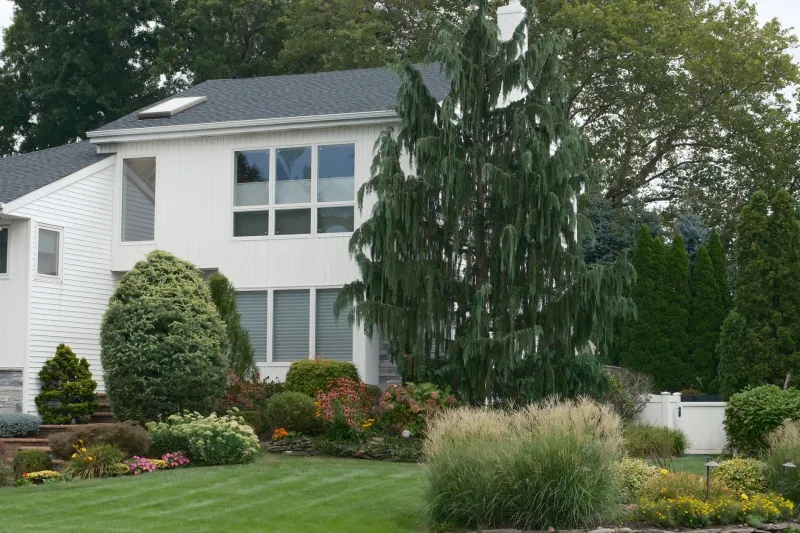
There is a moment, familiar to almost every serious homebuyer, when you turn onto a prospective street and feel something before you can name it. The houses seem well-kept. The lawns are trimmed. The flower beds, even modest ones, show evidence of attention. Or, alternatively, the opposite impression settles in—peeling paint, overgrown shrubs, a general sense of neglect—and something in your judgment quietly shifts.
That instinct is worth trusting, and more importantly, worth understanding. What you are perceiving in those first few seconds is not merely aesthetics. You are reading a data set that real estate professionals, urban economists, and behavioral researchers have studied for decades: the visible upkeep of a neighborhood's exterior spaces as a reliable predictor of long-term property value.
At 119 Woods Drive, we believe that informed buyers are better buyers. So let's examine what front yards actually tell you—and how to interpret those signals with precision before you ever submit an offer.
The Psychology Behind Exterior Maintenance
Homeowners who maintain their front yards are communicating something beyond personal preference. They are demonstrating a willingness to invest time and resources into a shared visual environment—one that, by its very nature, exists for the neighborhood as much as for themselves.
Research in environmental psychology has long established a connection between visible order and community cohesion. When residents perceive that their neighbors are invested in the block's appearance, they are more likely to maintain their own properties in kind. This dynamic is self-reinforcing. A street where most homes reflect consistent care tends to sustain that standard over time, while a street where upkeep is uneven often trends toward further decline.
For a prospective buyer, this matters enormously. The question is not merely what the block looks like today, but what behavioral pattern it reflects—and whether that pattern is likely to hold or erode over a ten- to twenty-year horizon.
What Consistent Landscaping Actually Signals
Landscaping quality is frequently dismissed as a cosmetic concern. In reality, it is one of the most accessible proxies for homeowner engagement available to a buyer conducting street-level research.
Consider what maintained landscaping requires: regular time, moderate financial outlay, and a long-term orientation. A homeowner who invests in lawn care, plants perennials, edges their walkway, or keeps their beds mulched is demonstrating all three of these qualities simultaneously. They are not transient. They are not indifferent to their home's condition. And they are thinking beyond the immediate season.
Studies conducted by the National Association of Realtors and independent academic researchers have found that well-landscaped homes can command premiums ranging from five to twelve percent above comparable properties in less-maintained settings. More significantly, neighborhoods with consistently high exterior upkeep across multiple properties tend to appreciate at stronger rates over extended periods, particularly during market corrections when poorly maintained blocks experience steeper declines.
When you observe a street where the majority of front yards reflect genuine care—not perfection, but intentionality—you are observing a block whose residents have implicitly agreed to protect their collective investment.
The Subtler Details Worth Examining
Beyond lawn condition, several additional exterior elements function as meaningful indicators during a pre-offer walkthrough.
Driveways and walkways. Cracked or heaving concrete that has been left unaddressed for years suggests either financial constraint or diminished engagement with the property's upkeep—neither of which bodes well for long-term neighborhood stability. Freshly sealed driveways or recently repaired walkways indicate the opposite.
Exterior paint and siding. Paint is among the most cost-effective forms of home maintenance, which makes its neglect particularly telling. Peeling, fading, or mismatched paint on multiple homes within a block can signal a broader pattern of deferred maintenance that tends to compound over time.
Lighting and hardware. Porch lights, house numbers, mailboxes, and door hardware are small details that collectively reveal whether a homeowner is paying attention to their property's presentation. On a block where these elements are consistently updated or well-maintained, the underlying culture of ownership tends to be stronger.
Seasonal decoration and seasonal readiness. A home prepared for winter with weatherstripping, storm doors, and properly stored outdoor furniture reflects a different level of owner engagement than one where seasonal tasks are routinely deferred.
None of these details, in isolation, constitutes a definitive judgment. Taken together across a full block, they form a composite portrait of neighborhood culture that no listing sheet will ever capture.
How to Conduct a Systematic Block Assessment
Rather than relying on a general impression, consider developing a more structured approach when evaluating a prospective neighborhood.
Walk or drive the block at least twice—once during the week and once on a weekend, when residents are more likely to be present and engaged with their properties. Note the ratio of well-maintained homes to those showing visible deferred maintenance. A block where seventy percent or more of the homes reflect consistent upkeep is meaningfully different from one where that figure falls below half.
Pay attention to the transition zones: the strip between the sidewalk and the curb, the condition of fencing along property lines, and the treatment of shared or visible side yards. These peripheral spaces often reveal maintenance habits more honestly than front-facing landscaping, which some sellers will address immediately before listing.
If possible, return to the block after a rainfall. How properties handle drainage, whether gutters are clean and functional, and whether low-lying areas show evidence of standing water can all inform your understanding of both individual property condition and broader neighborhood infrastructure.
Long-Term Value and the Compounding Effect of Community Standards
The relationship between exterior upkeep and property appreciation is not linear—it compounds. A neighborhood that maintains high visible standards over a decade tends to attract buyers who share that orientation, which reinforces the standard for the next cycle of ownership. Conversely, a block that begins to show consistent neglect often enters a self-reinforcing decline that is difficult and slow to reverse.
For a buyer purchasing with a ten- or twenty-year horizon in mind, this compounding effect is one of the most consequential factors in the entire transaction. The home itself—its square footage, its finishes, its mechanical systems—exists within an environment that will either amplify or diminish its value over time. That environment is shaped, in no small part, by the choices visible in the front yards of every home on the street.
A Final Word Before You Offer
The listing will tell you about the kitchen renovation and the new roof. The inspection report will document the mechanical systems. But neither document will tell you whether the people who live on that block have collectively decided to care for it.
For that information, you must look outside. You must read the yards, the driveways, the paint, and the small details that accumulate into a portrait of a community's priorities. Done carefully, this kind of observation is among the most valuable research a buyer can conduct—and it costs nothing but attention.
At 119 Woods Drive, we believe the right home is never just a structure. It is a position within a neighborhood, and that neighborhood's trajectory is written, in part, on every front yard you pass on your way to the front door.