Why Walkability Is One of the Strongest Long-Term Investments on Any Residential Block
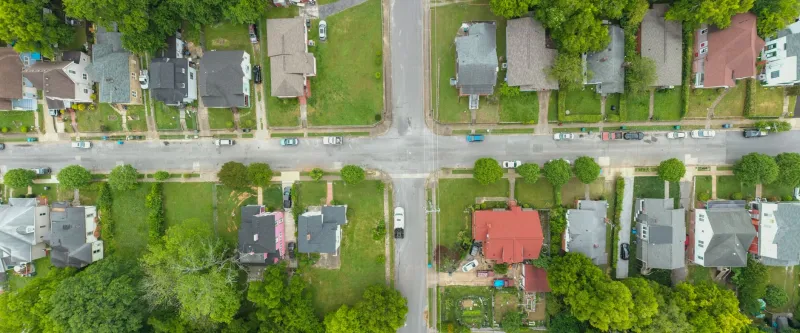
When buyers evaluate a home, they tend to focus on what they can see inside: the kitchen layout, the condition of the floors, the size of the primary bedroom. Yet one of the most durable contributors to long-term property appreciation lies entirely outside the front door — literally underfoot, in the form of sidewalks, crosswalks, and the proximity of daily errands.
Walkability, once considered a soft amenity reserved for urban neighborhoods, has emerged as a quantifiable and economically significant factor in residential real estate. For buyers thinking beyond the first year of ownership, understanding how pedestrian-friendly design shapes value over a ten-year period may be among the most consequential research they conduct.
What Walkability Actually Means at the Block Level
The term is frequently used in broad strokes, but walkability is most meaningful when examined at a granular level. A neighborhood's overall Walk Score — a widely referenced metric that assigns a number between 0 and 100 based on proximity to amenities — offers a useful starting point. However, block-level conditions tell a more precise story.
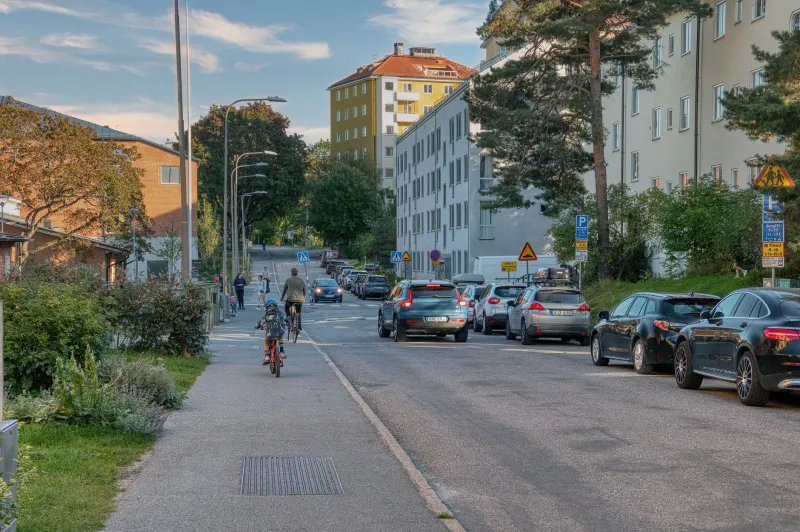
Consider the difference between two homes that sit within the same zip code. One fronts a continuous, well-maintained sidewalk with clearly marked crosswalks at either end of the block, a transit stop within a quarter mile, and a small commercial corridor — a coffee shop, a pharmacy, a dry cleaner — reachable on foot in under ten minutes. The other sits on a street without sidewalks, requires a car to access even routine errands, and is bisected by a high-speed arterial road that discourages pedestrian activity.
These two properties may carry similar list prices today. Over the next decade, they are unlikely to perform equally.
The Data Behind the Premium
Several studies conducted across U.S. metropolitan areas have documented a statistically significant relationship between walkability and home values. Research published by the American Institute of Real Estate Appraisers and subsequent analyses by organizations including the Urban Land Institute have found that properties in highly walkable neighborhoods command premiums ranging from 4 to 24 percent over comparable homes in car-dependent areas — a spread that widens as holding periods lengthen.
A 2023 analysis examining residential sales data across fifteen major U.S. cities found that homes with Walk Scores above 70 appreciated at an average annual rate approximately 1.2 percentage points higher than those with scores below 40. Over ten years, that compounding difference translates into tens of thousands of dollars in additional equity for the median-priced home.
The mechanism is not difficult to trace. Walkable blocks tend to attract a broader pool of buyers, including younger households and retirees who increasingly prioritize reduced automobile dependence. Broader demand sustains pricing power even during market corrections. Additionally, walkable neighborhoods frequently see reinvestment in local retail and services, which in turn attracts further residential demand — a self-reinforcing cycle that car-dependent blocks rarely experience.
Sidewalk Quality as a Proxy for Civic Investment
One detail that experienced buyers learn to scrutinize is the physical condition of sidewalks themselves. Cracked, uneven, or absent pedestrian infrastructure signals more than inconvenience. It often reflects the level of municipal investment in a given corridor — and that investment, or its absence, shapes the trajectory of surrounding property values.
Blocks with regularly maintained sidewalks, Americans with Disabilities Act-compliant curb cuts, and pedestrian-scale lighting tend to be located in areas where local government and community associations are actively managing the public realm. That management culture correlates with better school maintenance, more responsive code enforcement, and the kind of incremental neighborhood improvements that accumulate into meaningful appreciation.
When touring a prospective home, walk the entire block — not just the section immediately in front of the property. Note whether sidewalks are continuous or interrupted. Observe whether crosswalks are clearly marked and whether signal timing accommodates pedestrian crossing. These physical details are proxies for something larger: the degree to which a community has committed to the pedestrian experience as a civic priority.
Proximity to Amenities: Measuring What's Actually Reachable
Walkability scores are calculated primarily on the basis of amenity proximity, but buyers should conduct their own assessment of what is genuinely accessible on foot — not merely what falls within a certain radius on a map.
A grocery store that sits 0.4 miles away means very little if the route requires crossing a six-lane boulevard without a crosswalk or navigating a stretch of road with no pedestrian accommodation. Conversely, a neighborhood coffee shop or farmers market that anchors a walkable commercial node can exert a disproportionate positive influence on surrounding residential values simply by creating foot traffic, social activity, and a sense of place.
Buyers should also consider directional walkability — whether the amenities accessible on foot align with their actual daily patterns. A walkable route to a park is valuable; a walkable route to a transit stop that connects to an employment center is transformative for both quality of life and long-term resale appeal.
The Appreciation Differential Over Time
It bears emphasizing that the financial case for walkability is strongest when examined over extended holding periods. In the first year or two of ownership, the premium paid for a walkable block may feel like a cost rather than an investment. Over a decade, the calculus shifts considerably.
Consider a buyer who purchases a home on a walkable block at a 7 percent premium over a comparable property on a car-dependent street. If the walkable property appreciates at even a modestly higher annual rate — say, 1.5 percentage points — that premium is recovered within approximately five years, and the buyer continues to accumulate additional equity for the remainder of their ownership period. The math becomes more compelling still when factoring in reduced transportation costs, which academic research consistently links to walkable living.
How to Assess Walkability Before Making an Offer
For buyers preparing to evaluate a specific property, the following practical steps can provide a more grounded picture than any online score alone.
Walk the block at different times of day. Morning and evening pedestrian activity signals genuine use of the public realm, not just theoretical accessibility.
Map your actual errands. Identify the three or four destinations you visit most frequently — grocery store, gym, pharmacy, transit — and physically walk each route before making an offer. Note infrastructure quality, crossing safety, and overall comfort.
Check municipal sidewalk maintenance records. Many cities publish infrastructure maintenance schedules or complaint histories through open data portals. A block with repeated unresolved sidewalk complaints may signal deferred investment.
Speak with residents. Neighbors who walk regularly can offer candid assessments of what is and is not genuinely accessible on foot — and their answers will tell you more than any algorithm.
The Long View
At 119 Woods Drive, we believe that the most durable real estate decisions are made by buyers who look past the immediate and consider the structural forces that will shape a property's value over years and decades. Walkability is one such force — quiet, unglamorous, and consistently underestimated at the moment of purchase.
The sidewalk in front of a home is not incidental. It is, in a very real sense, part of the investment.